Renovation of the Äijänsuo Practice Ice Hall Base Slab to Improve Ice Quality and Energy Efficiency
News
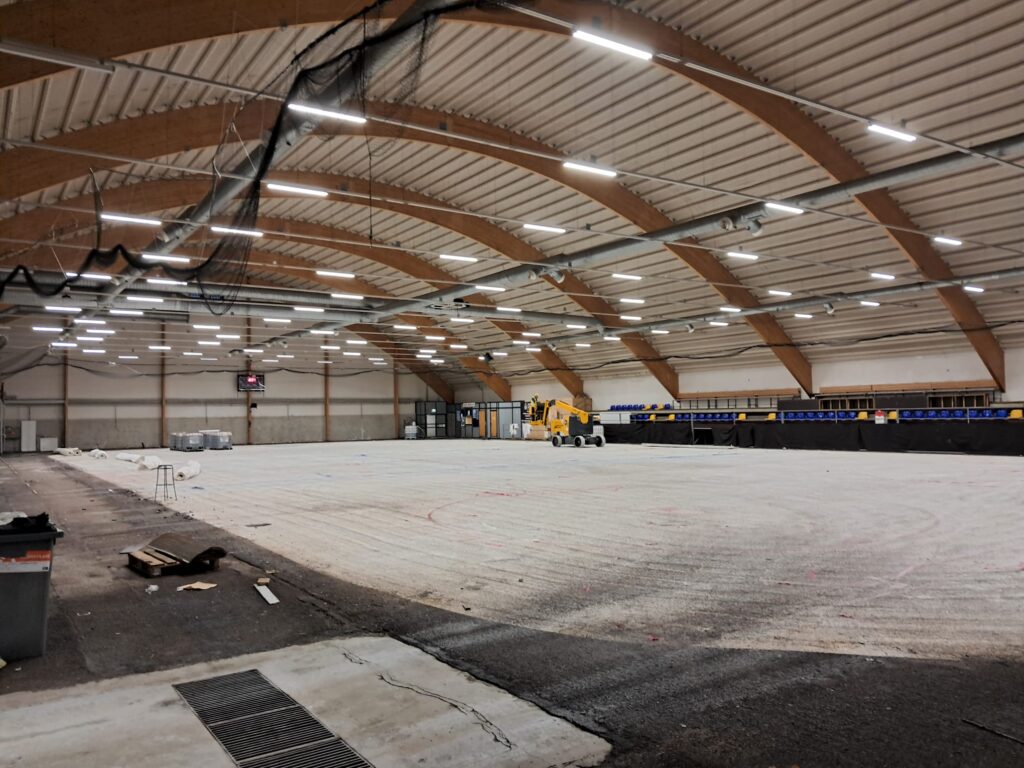
Renovation work on the base slab of the Äijänsuo practice ice hall began at the end of March with the dismantling of the rink and other structures. Actual construction work started on 7 April 2026 with the installation of protective structures. The aim of the renovation is to improve the safety and quality of the ice and to provide better conditions for users of the hall.
– During the construction work, the parking area in front of the hall will be closed, and the pedestrian and cycling route passing in front of the building has been diverted to an alternative route, says Sports Grounds Manager Tommi Cederberg.
Once the protective structures are in place, the old asphalt surface and refrigeration piping beneath the ice surface will be removed. At the same time, soil layers beneath the piping will be replaced where necessary. The required depth of replacement will depend on whether there is a frost layer beneath the rink.
A new frost protection piping system and insulation layer will be installed beneath the new reinforced concrete base slab. In addition, the refrigeration transfer piping between the practice ice hall and the refrigeration plant will be renewed. The refrigeration plant serves both Kivikylä Arena and the practice ice hall.
The project is scheduled to be completed by 31 August 2026 at the latest. After construction is finished, reopening the hall for users will take approximately another 1.5 weeks. The contractor is Saltex Infra Oy, and the total value of the project is EUR 575,000.
Safer Ice and Improved Energy Efficiency
The old base structure of the practice ice hall has significantly affected ice quality and safety.
– The old asphalt base has shifted over the years, causing cracks in the ice. With the new slab, the ice surface will be safer and more even. The flatness requirement for the concrete slab is ±5 millimetres, whereas the old asphalt base had height differences of several centimetres, Cederberg explains.
Replacing the base slab will also have a major impact on the hall’s energy efficiency. Due to the old asphalt base, the ice had to be kept at a thickness of at least 5–6 centimetres to support the free-standing boards surrounding the hall.
– With the new concrete slab, the current flexible rink boards will be anchored to the slab, allowing the ice thickness to be reduced to an optimal 3–4 centimetres. The thinner the ice layer, the less cooling energy is needed to maintain the desired ice surface temperature of –5 degrees, Cederberg says.