Household Waste Management
Waste management of the property
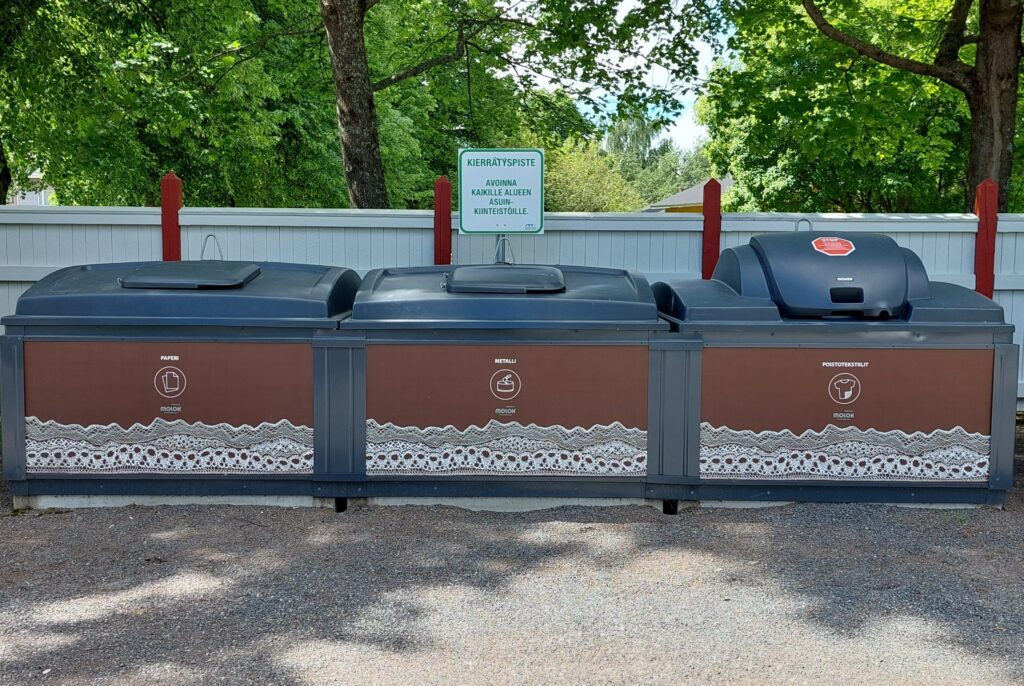
The property owner shall arrange a waste collection point and procure a number of waste containers in accordance with the waste management regulations. The property owner shall ensure that the collection point is properly equipped, maintained and kept clean.
Waste containers must be placed on a horizontal, wear-resistant surface that does not have a threshold, step or other obstacle. The door leading to the collection point must be equipped with a device that keeps the door open.
The collection point must be sized so that waste containers for different waste types can be moved for emptying without moving other waste containers.
Snow plowing and anti-slip measures must be taken so that moving and emptying waste containers is safe.
Manually moved wheeled waste containers must be placed so that a waste truck can reach a maximum distance of 10 metres from the waste containers without obstruction and safely. If containers have to be dragged more than 10 meters, a towing fee according to the waste tariff will be feed for each additional ten meters.
Quality requirements for a hand-carried waste container
- Lid
An intact lid keeps waste dry, prevents odours and prevents pests from entering the container. - Handles
Proper handles make it easier to transport the container and contribute to a safer working environment for the waste collector. - Mechanically loadable
To keep the container in the skip of the truck and withstand mechanical emptying, the container must have a sturdy collar. The minimum size is 140 l. - Wheels
Wheels make it easier to transport the waste container and contribute to a safer working environment for the waste collector.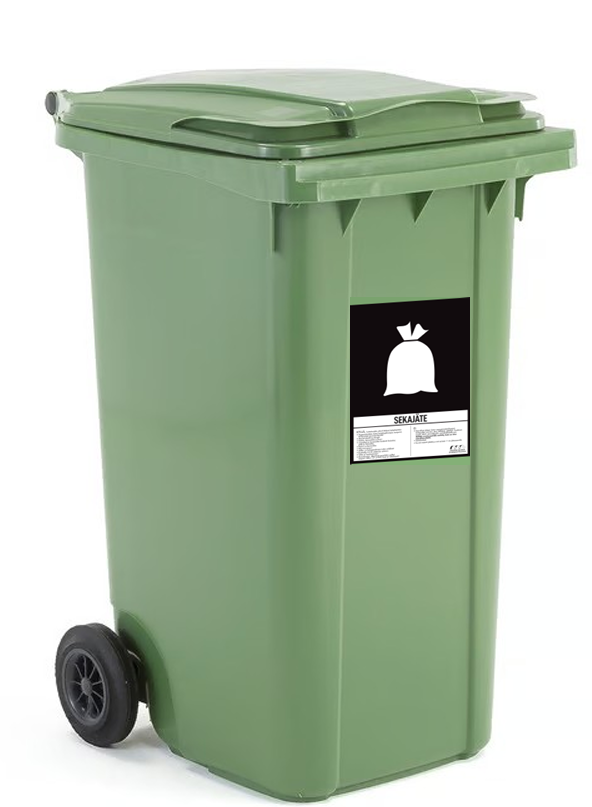
Shared containers
A shared waste container for several users is the most affordable way to ensure proper waste management. The shared container system can consist of two or more properties belonging to close neighbours in the sparsely populated area, the shared container system can also be formed by village committees and road maintenance committees. The shared container must have a contact person who is responsible for the maintenance of the container. The bill can be divided among the shared container members in the desired proportions.
Emptying the waste container
You can join the waste collection by filling out the registration form or by contacting customer service at jatehuollonlaskutus@rauma.fi or tel. 040 833 1060 (Mon-Fri 9–15)
• Emptying takes place at an agreed emptying interval (1, 2 or 4 weeks) on a specific day of the week
• You can change the emptying interval by contacting customer service
• The collection day may change in exceptional cases if there are public holidays during the week, if the collection vehicle breaks down, or if another unforeseen situation occurs
• Temporary changes to the collection day will not be announced, so it is advisable to keep the waste container permanently in the same place
| Waste type | Longest allowed emptying interval |
| Mixed waste | 4 weeks |
| Mixed waste, if biowaste is composted or collected separately | 12 weeks |
| Biowaste | 2 weeks |
| Ventilated biowaste container | 4 weeks |
| In-ground biowaste container | 6 weeks |
| Number of apartments | 1-4 | 1-4 in the Rauma city center | 5 or more |
| Mixed waste | x | x | x |
| Biowaste | x | x | |
| Cardboard packaging | x | ||
| Metal | x | ||
| Glass packaging | x | ||
| Plastic packaging | x |
General instructions for mixed waste containers
- You may place mixed waste in the container, provided that recyclable waste and hazardous waste have been removed
- The colour of the waste container does not matter, as long as the container has a waste label
- Dusty waste, ash, etc. are packed so that it does not spread into the environment when emptied
- The maximum weight of a manually movable waste container is 60 kg
- Overweight containers may be left unemptied
- The waste truck must have unobstructed access within 10 meters of the waste container
- Areas and pathways must be such that the container can be moved without obstruction (e.g., snow cleared, pathways sanded)
- A garbage bag holder is not a permitted collection container
- Excess waste may be temporarily left in loose bags for transport for a fee
The following items do not belong in the waste container
- flammable and explosive waste
- liquid waste
- hazardous waste
- toilet waste
- road sand or soil
- large and heavy objects, construction waste
- electrical and electronic waste
- recyclable waste
Container not emptied
Sometimes a waste container may not be emptied, for example if the container is broken, frozen or contains waste that does not belong there, or if the access to the waste container is blocked or impassable. Sometimes the reason is human error.
Please report any unemptied containers to the Rauma Waste Management as soon as possible so that the cause can be investigated and a new collection scheduled.
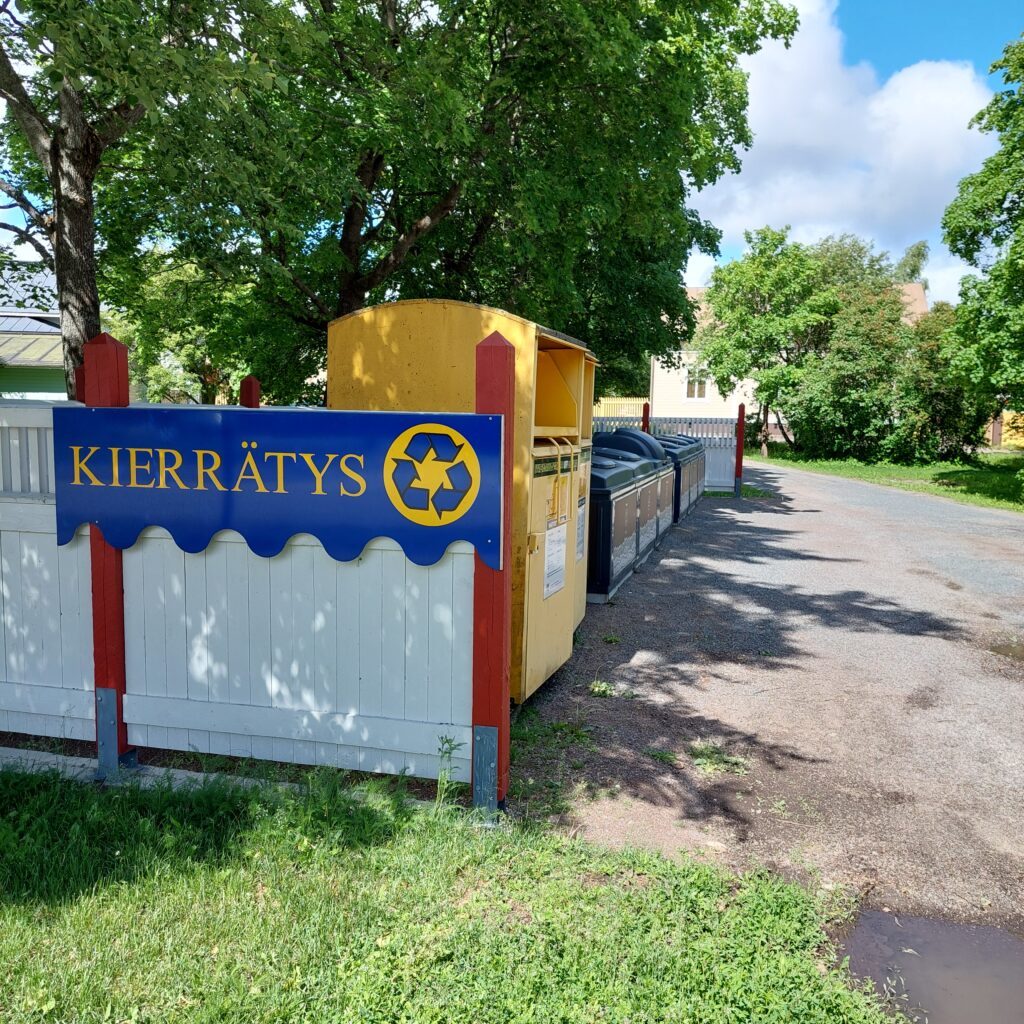
Rauma
Mixed waste: container emptying is ordered from the Rauma waste management. Each residential property must have either its own or a shared mixed waste container with a neighbor.
Packaging waste (plastic, cardboard, metal, glass): packaging waste must be sorted separately from mixed waste. Residents of detached houses must primarily deliver packaging waste to recycling points. Detached house owner can also order container emptying from the Rauma waste management.
Biowaste: Container emptying is ordered from the Rauma waste management. In the Rauma city center, each residential property must have its own or a shared composter or a separate collection container for biowaste. For other residential properties, collection/composting of biowaste is voluntary.
Eurajoki
Mixed waste: the owner of the property orders the emptying of the mixed waste container from the waste transport company of their choice. Every residential property must have either its own or a shared mixed waste container with a neighbor.
Packaging waste (plastic, carton, metal, glass): emptying is ordered from The Rauma Waste Management. The collection of packaging waste is voluntary for single-family residents.
Biowaste: emptying is ordered from The Rauma Waste Management. Biowaste collection is voluntary for single-family residents.
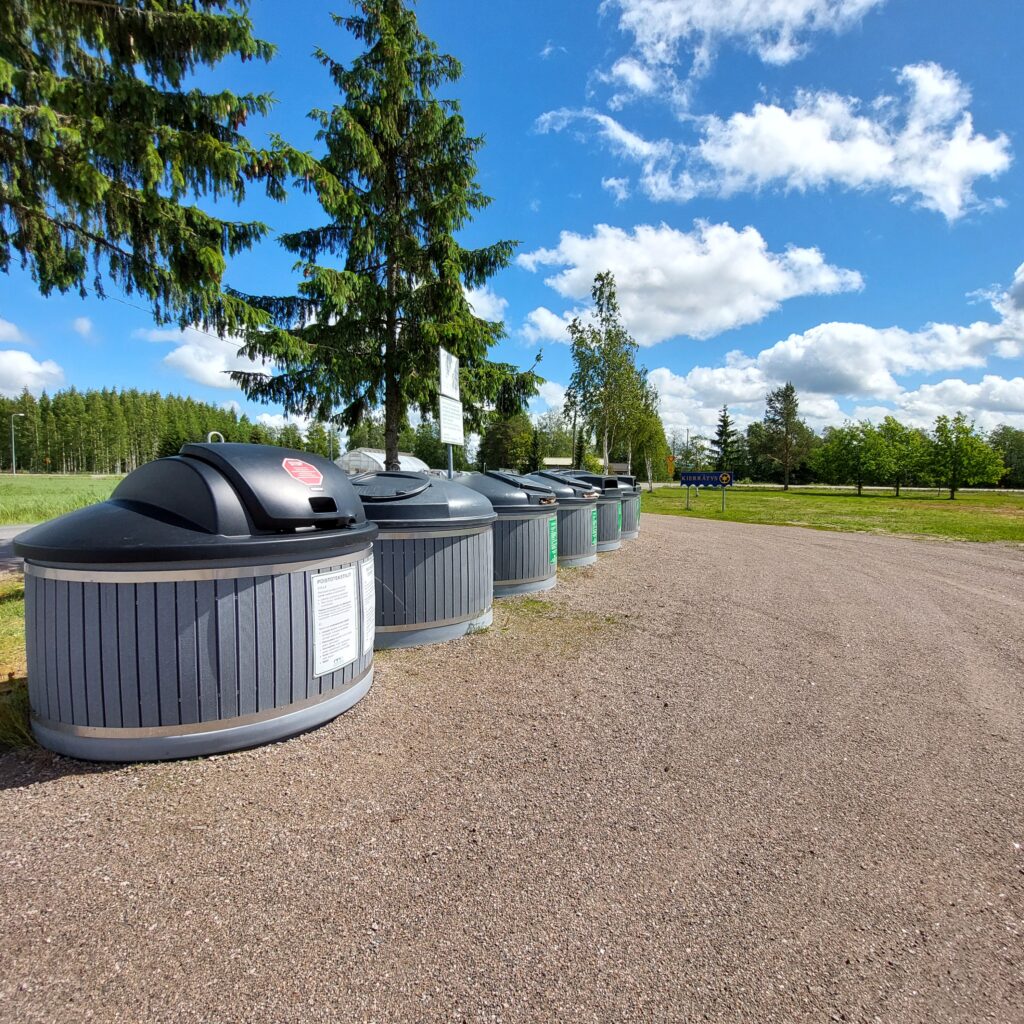
Waste management of residential sludge
General guidelines for residential sludge waste management
The waste management of residential sludge is regulated in the waste management regulations of the Rauma Region Waste Management Committee.
Sludge generated in residential areas must be delivered to the reception sites designated by the municipality or treated in accordance with Section 33 of the waste management regulations.
A written notification must always be made in advance to the waste management authority about the independent treatment of sewage sludge and any changes to it. The waste management authority will forward the notifications to the municipal environmental protection authority, which may prohibit the independent treatment of sludge.
Sewage sludge or wastewater may not be spread in forests or other terrain or untreated on fields.
In Rauma and Eurajoki, waste transport arranged by the property owner is in use for sludge transport.
The emptying of sludge generated in residential areas is agreed upon by contacting the sludge transporter. The property owner is responsible for ensuring that the company providing transport services is included in the waste management register maintained by the Licensing and Supervision Agency. The property owner has the right to obtain from the sludge transporter an extract from the waste management register, which shows that the transporter is approved for the relevant register.
Emptying intervals and delivery of sludge for processing
Sludge removal from septic tanks used for the treatment of wastewater containing toilet waste must be carried out primarily in accordance with the approved wastewater plan or the instructions provided by the manufacturer, in accordance with the above-mentioned minimum annual obligation.
Wastewater sludge from septic tanks containing only greywater sludge must be removed when necessary, but at least every two years.
Attention must be paid to the condition of the tanks when emptying, and the emptier must report any deviations he or she observes to the property owner.
The minimum emptying interval must be observed even if the sludge is handled independently on the property in accordance with Section 33 of the Waste Management Regulations.
Closed tanks and their filling and the operation of the fullness alarm must be monitored regularly, at least once a year. Closed tanks must be emptied when necessary.
The property owner must keep records of the emptying of wells, sludge removal and inspections.
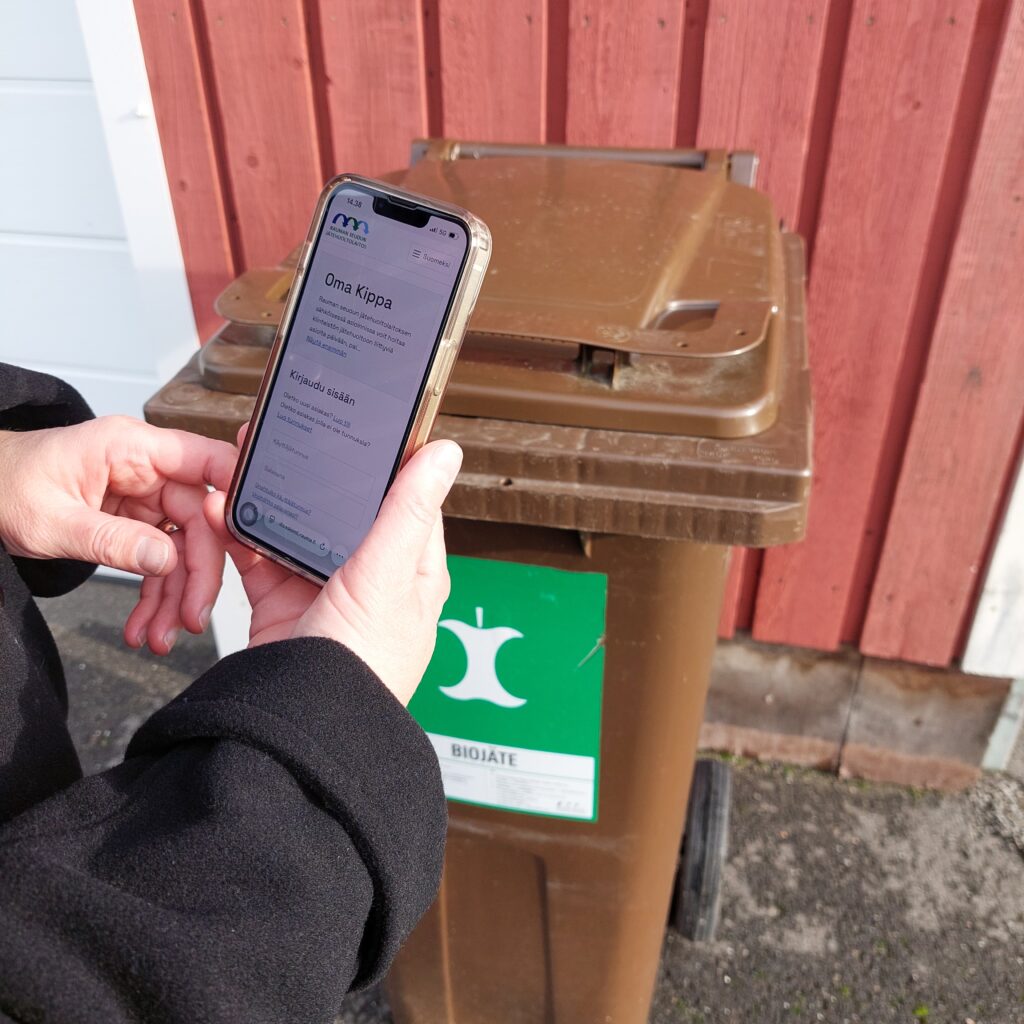
Oma Kippa
In the electronic services of the Rauman seudun jätehuoltolaitos, you can take care of waste management issues related to your property regardless of the time and place.