Body-Worn Cameras and Electric Vehicle Introduced to Support Parking Inspectors’ Work Safety
News
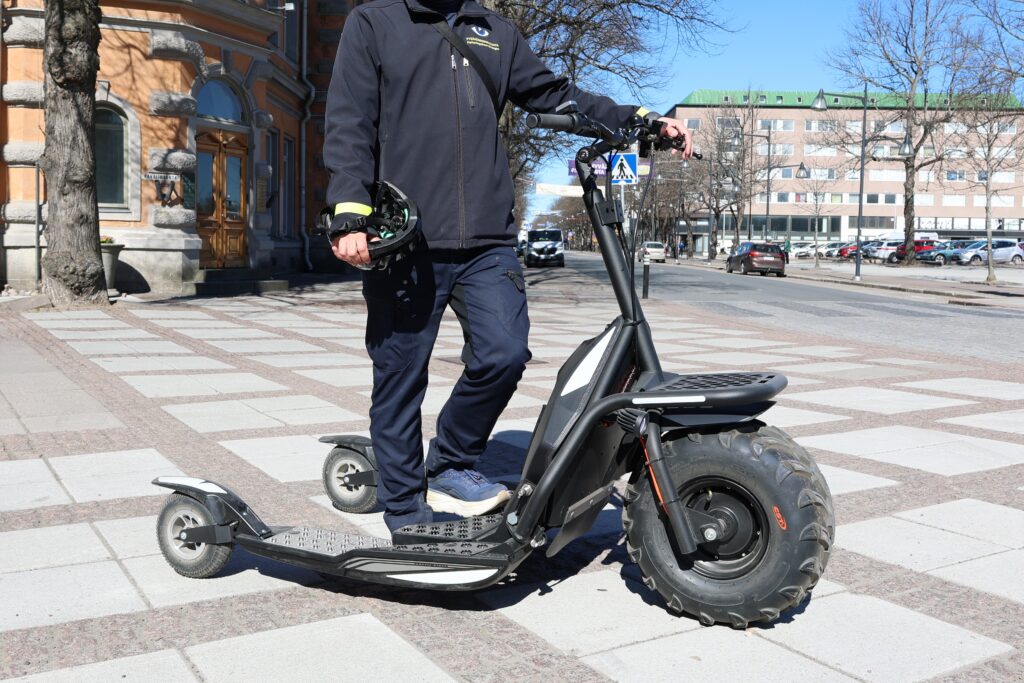
The City of Rauma is improving the occupational safety and well-being of its parking inspectors by introducing body-worn cameras and a three-wheeled electric scooter. The body cameras will be taken into use in May, while the electric scooter has been in use since the end of April. The aim of these measures is to improve work efficiency and support inspectors in their daily tasks.
The introduction of body-worn cameras is based on the city’s own occupational safety assessment. The cameras are intended to increase safety, especially in challenging customer situations. Parking inspectors will receive training before the cameras are taken into use.
– The cameras are expected to have a preventive effect in potentially threatening customer encounters. A camera is only used in situations where an interaction feels threatening or occupational safety is otherwise at risk, says Jari Salminen, Head of Street Maintenance.
Recording Only When Activated
The body-worn camera is attached to the uniform in a visible place and records only when the inspector activates the recording.
– The recordings are stored in a secure system that can only be accessed by the inspectors’ supervisor and the Parking Control Officer. Recordings can be retrieved only for a justified reason related to occupational safety or on the basis of a specific and justified request from another authority. Recordings are stored for 90 days, after which they are automatically deleted, Salminen says.
Electric Scooter Makes Inspection Work Smoother
In addition to the body-worn cameras, the well-being of parking inspectors is supported by a shared mobility solution. The three-wheeled electric scooter reduces physical strain, makes it easier to move around during the workday, and improves supervision in different locations. It also reduces the need to use a car for inspection work, supporting more environmentally friendly mobility.
– The electric scooter reduces walking-related strain and allows quick responses to enforcement requests coming from outside the city centre. When necessary, supervision can be increased in places such as bus stops, pedestrian crossings, and permit-controlled areas, Salminen adds.